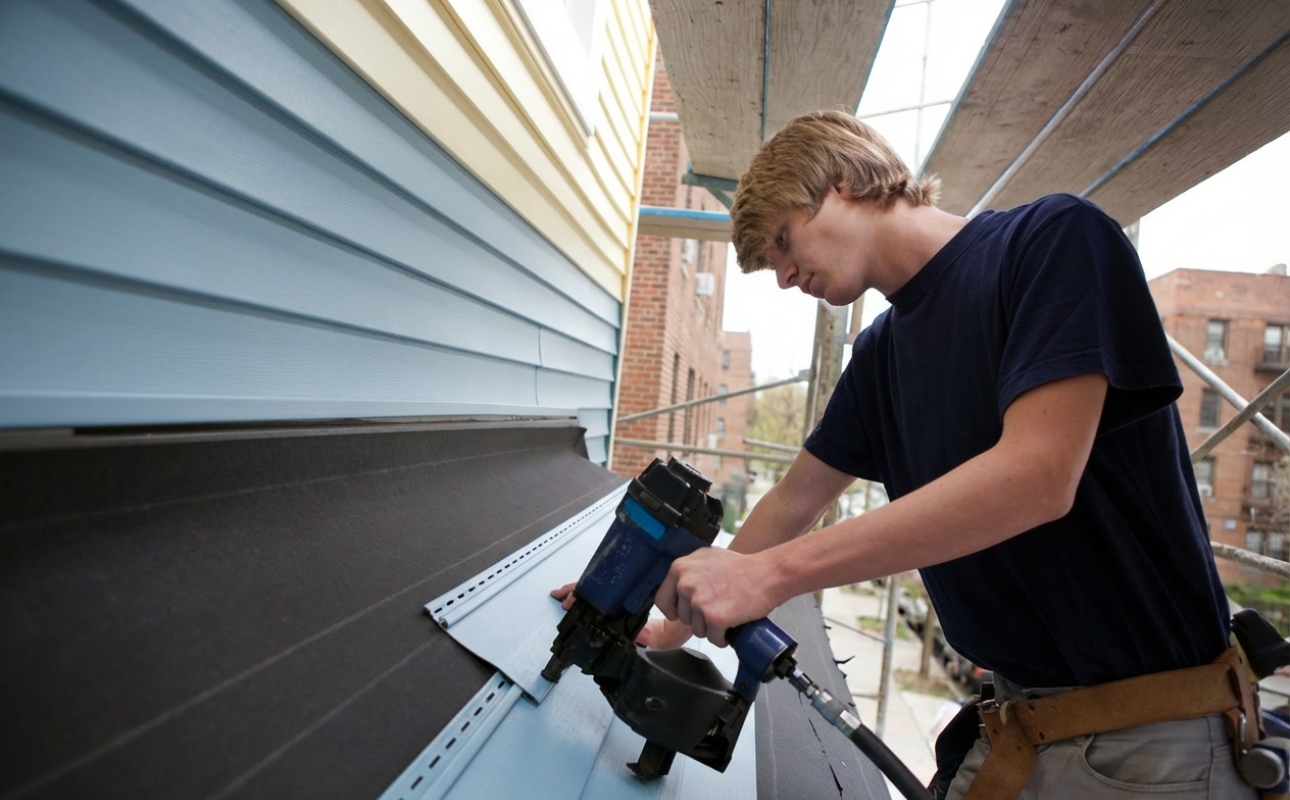
Why Siding Replacement Matters for Your Bronx Home
Siding protects your home while defining its market value and curb appeal. Bronx properties face demanding conditions—winter temperatures below 20°F, summer humidity exceeding 70%, and 47 inches of annual precipitation. These factors accelerate siding deterioration, making replacement both protective and strategic.
Damaged siding compromises thermal efficiency, allowing air leakage and moisture penetration. This creates elevated utility bills, mold growth, and structural decay. We at Padma address these vulnerabilities while transforming property appearance.
The Problem with Aging Siding
Common failure indicators include warping boards, paint flaking, water stains beneath eaves, and gaps at corner trim. Once integrity breaks down, weather infiltration accelerates—superficial cracking progresses to sheathing rot requiring costly structural repairs.
Vinyl from the 1980s-90s becomes brittle after UV exposure, cracking during temperature shifts. Wood absorbs moisture in humid summers, swelling and trapping water against framing. Winter freeze-thaw cycles then split fibers, creating entry points for carpenter ants and termites.
How Quality Siding Transforms Your Home
Modern fiber cement resists moisture absorption below 5%, preventing rot cycles. Contemporary vinyl includes UV stabilizers maintaining color for 30+ years. New installations incorporate weather-resistant barriers and proper ventilation, creating drainage planes that channel water away from sheathing.
The Financial Benefits of Siding Replacement
Return on Investment (ROI)
Remodeling Magazine’s 2024 Cost vs. Value Report shows siding replacement delivering 75-95% cost recovery at resale. Vinyl replacement returns approximately 94% of investment value, while fiber cement returns 88%. These figures exceed kitchen remodels (62%) and bathroom additions (54%), making siding one of the smartest exterior investments.
For Bronx properties in Riverdale, Pelham Bay, and Throggs Neck, exterior condition significantly influences buyer decisions. Fresh siding accelerates sale timelines by 2-3 weeks according to local realtor data, reducing carrying costs and mortgage overlap periods.
Long-Term Savings Through Energy Efficiency
Insulated vinyl adds R-2 to R-4.5 thermal resistance, reducing heat transfer through walls by 20-30%. For typical Bronx homes heating with natural gas, this translates to substantial annual savings that accumulate significantly over a 25-year siding lifespan.
Fiber cement’s low thermal conductivity combined with proper insulation creates thermal breaks reducing HVAC runtime cycles. Homeowners report 12-18% utility cost reductions in the first year post-installation, particularly noticeable during January and July peak demand periods.
Reduced Maintenance Costs
Wood siding requires repainting every 3-7 years plus annual treatments, caulking repairs, and rot spot fixes. Over 20 years, these maintenance expenses accumulate substantially. Vinyl and fiber cement require only periodic power washing, creating significant lifetime maintenance savings.
Popular Siding Materials for Bronx Homes
Vinyl Siding
Vinyl dominates Bronx installations with 0.45mm-0.55mm thickness profiles resisting impact damage from hail and wind-blown debris. Premium grades feature foam backing increasing R-value to 4.0 while reducing noise transmission—valuable for properties near major thoroughfares like the Cross Bronx Expressway.
Color options exceed 50 shades, from classic whites and beiges to modern grays and blues matching Bronx’s evolving architecture. Quality vinyl withstands temperature fluctuations from -40°F to 160°F without cracking or warping. Look for products meeting ASTM D3679 standards with minimum impact strength of 5 foot-pounds and wind resistance ratings of 200+ mph.
Fiber Cement Siding
Fiber cement’s composition—cement, sand, and cellulose fibers—creates a substrate impervious to moisture, insects, and fire. This material achieves Class A fire ratings (flame spread index below 25), particularly valuable in Bronx’s dense urban environment where fire can spread between adjacent properties.
Fiber cement accepts paint exceptionally well, allowing custom color matching and 15-25 year repaint cycles versus wood’s 5-7 years. Installation requires specialized carbide-tipped blades and pneumatic nailers capable of driving fasteners through dense cementitious material.
Proper installation includes 1/4-inch expansion gaps at joints preventing board buckling during thermal expansion.
Wood Siding
Cedar and redwood siding appeal to owners of historic Bronx properties seeking authentic restoration. These woods contain natural tannins providing inherent insect resistance, though moisture management remains critical.
Proper wood siding installations require back-priming (sealing all six board sides before installation), stainless steel fasteners preventing rust staining, and 1/8-inch gaps between boards allowing moisture escape.
Despite maintenance demands requiring repainting every 5-7 years, wood remains preferred for landmark properties where maintaining architectural character carries premium value.
Brick and Stone Veneers
Thin brick and stone veneers (3/4-inch to 1-inch thickness) deliver masonry aesthetics at a fraction of full brick installation costs. These veneers install over existing framing using mortar beds or mechanical attachment systems, adding 7-10 pounds per square foot—well within typical wall loading capacities.
Bronx installations favor limestone and brownstone veneers matching the borough’s architectural heritage. Veneers require virtually zero maintenance beyond occasional repointing every 25-30 years, making them the ultimate set-and-forget option for homeowners planning long-term ownership.
The Installation Process
Professional Assessment and Planning
Comprehensive siding assessments include moisture meter readings identifying hidden water damage, thermal imaging revealing insulation voids, and structural inspections checking wall framing integrity. Contractors evaluate existing sheathing conditions—homes with deteriorated OSB or plywood require replacement before new siding installation.
Planning includes substrate preparation specifications: installing house wrap moisture barriers, flashing window and door openings, and establishing proper J-channel configurations at transitions. These preparatory steps consume 30-40% of total installation time but determine long-term performance.
Preparation and Removal
Professional removal prevents sheathing damage through careful prying techniques and strategic fastener removal. Contractors inspect exposed framing for rot indicators: wood darkening, soft spots under pressure, and fungal growth. Bronx homes built before 1950 often reveal knob-and-tube wiring requiring electrical updates before closing walls.
Removal generates substantial waste—2,500 square feet of vinyl siding produces 3-4 tons of material requiring proper disposal. Reputable contractors secure necessary permits for roll-off dumpsters in Bronx’s parking-restricted neighborhoods.
Installation and Quality Assurance
Expert installation maintains consistent nail placement 16 inches on-center, drives fasteners to proper depth (leaving 1/32-inch play for thermal movement), and maintains level courses preventing visual distortion. Contractors verify square measurements at corners, ensuring pattern consistency and professional appearance.
Quality checks include water testing around penetrations, verifying proper overlap at horizontal seams (minimum 1 inch), and confirming adequate ventilation through soffit and ridge configurations. These verification steps protect manufacturer warranties requiring installation per specified guidelines.
Why Choose Professional Contractors for Siding Replacement
Expertise and Experience
Professional contractors understand Bronx’s unique requirements: navigating Department of Buildings permit processes, coordinating inspections at rough-in stages, and addressing landmark district restrictions affecting exterior alterations.
They maintain relationships with material suppliers ensuring access to preferred products and managing delivery logistics in dense urban environments.
Experienced teams complete installations 40-50% faster than DIY attempts while maintaining superior quality standards. They anticipate complications—discovering rot, addressing flashing failures, managing unexpected structural issues—drawing from thousands of hours of field experience.
Warranty Protection
Manufacturer warranties requiring professional installation provide 20-50 year coverage on materials. Contractor labor warranties (typically 2-10 years) cover installation defects: fastener failures, improper flashing, inadequate sealing. This dual warranty structure protects homeowners from both material defects and installation errors.
Safety and Compliance
Siding installation presents fall risks from scaffolding and ladders, requiring proper safety equipment: harnesses, toe boards, and guardrails. Professional crews carry substantial general liability insurance and workers’ compensation coverage protecting homeowners from liability should accidents occur.
They maintain OSHA compliance certifications and follow safety protocols reducing injury risks by 80% compared to untrained workers.
Getting Started with Padma Contracting
Free Consultation and Assessment
Padma Contracting provides detailed property assessments identifying current siding condition, underlying damage, and optimal replacement strategies. Consultations include material samples, performance comparisons, and recommendations tailored to your specific property needs and aesthetic preferences.
Detailed Quotes and Timeline
Comprehensive quotes itemize all project components: materials at specified grades and quantities, labor broken down by preparation and installation phases, permit requirements, and disposal logistics. Timelines account for Bronx weather patterns, permit processing (typically 2-3 weeks), and material lead times, establishing realistic completion expectations.
Professional Installation and Support
Padma Contracting coordinates all project phases: securing permits, scheduling inspections, managing material deliveries, and maintaining job site cleanliness. Project managers provide regular updates, address concerns promptly, and ensure installations meet quality standards protecting your investment for decades.
Frequently Asked Questions
How long does siding replacement typically take?
Most residential projects require 5-15 business days depending on home size and weather conditions. A typical 2,000-square-foot home averages 7-10 days from removal through final installation.
Do I need permits for siding replacement?
Yes, the Bronx Department of Buildings requires Alt-2 permits for siding replacement work. Permit processing typically takes 2-4 weeks. Padma Contracting handles all permit applications and inspection scheduling.
How long will new siding last?
Vinyl siding lasts 25-40 years, fiber cement lasts 50-80 years, wood lasts 20-40 years with proper maintenance, and brick/stone veneers last 100+ years. Actual longevity depends on installation quality and climate exposure.
Can I install new siding over existing siding?
Most building codes prohibit this practice. Removing old siding allows inspection of underlying structures, installation of modern moisture barriers, and proper fastening to structural framing—all critical for long-term performance.
What’s the best siding material for the Bronx climate?
Fiber cement and insulated vinyl perform exceptionally well in Bronx conditions. Both materials resist moisture absorption, withstand temperature extremes, and require minimal maintenance while providing excellent durability.
Will new siding improve my home’s energy efficiency?
Yes, new siding with proper insulation reduces heating and cooling costs by 10-20%. Insulated vinyl and fiber cement installed over quality house wrap create effective thermal barriers.
Is siding replacement a good investment?
Absolutely. Siding replacement delivers 75-95% ROI at resale and ranks among the best home improvement investments, providing both aesthetic enhancement and practical benefits like energy savings and reduced maintenance.